| Excerpt from article published on McGraw Hill’s Inspired Ideas for National Eating Disorders Awareness Week 2026
From the outside, I was the student every school celebrates. Disciplined, motivated, reliable. I followed rules, met expectations, and exceeded them whenever possible. Teachers praised my work ethic. No one worried about me because I gave them no reason to.
What no one saw was that the same traits earning me praise were quietly eroding my health, joy, and sense of self. As my world grew more uncertain and the stakes felt higher, I began grasping for control wherever I could find it. Restricting food quieted my anxiety and gave me a sense of focus I couldn’t find anywhere else. My struggle with anorexia began there.
This is the paradox educators and parents often miss: the students who seem to have it most together are sometimes the ones struggling the most.
When Strength Becomes a Mask
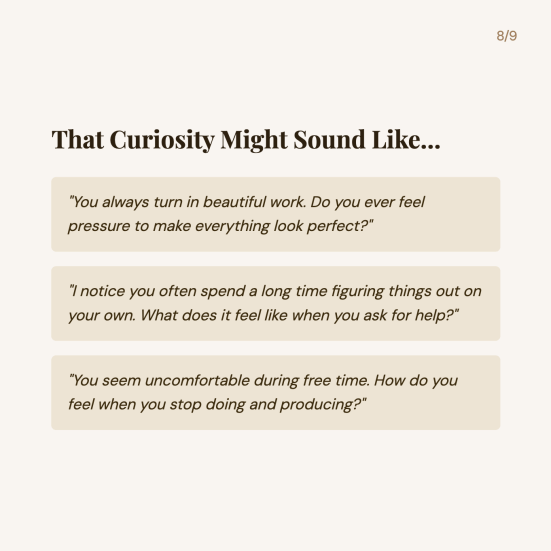
Schools are not wrong to value discipline, perseverance, and grit. These are highly valuable traits. But in achievement-driven environments, they’re often rewarded without curiosity about what’s fueling them, especially among those students who continually go above and beyond.
For some high achievers, these traits mask something much deeper.
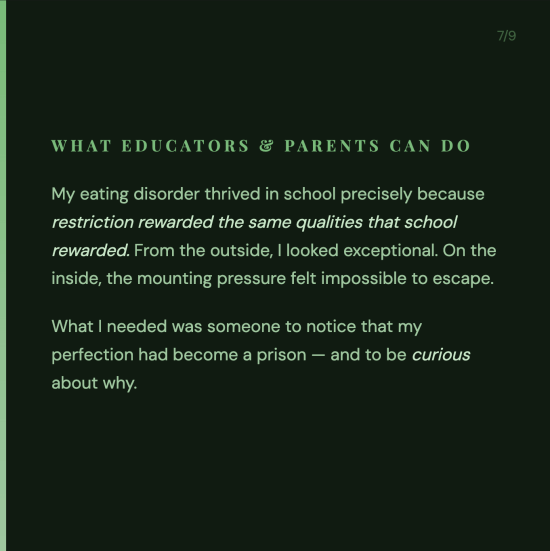
My perfectionism gave me an illusion of control. I measured my worth through achievement. My restrictive eating emerged as a coping strategy, and it worked frighteningly well. Anorexia was never just about food or body image for me. More than anything, restricting my intake made me feel calm, focused, and disciplined. And I desperately wanted to be disciplined and strong.
Because students like me are compliant, productive, and self-sufficient, our distress often goes unnoticed — or worse, gets misinterpreted as thriving.
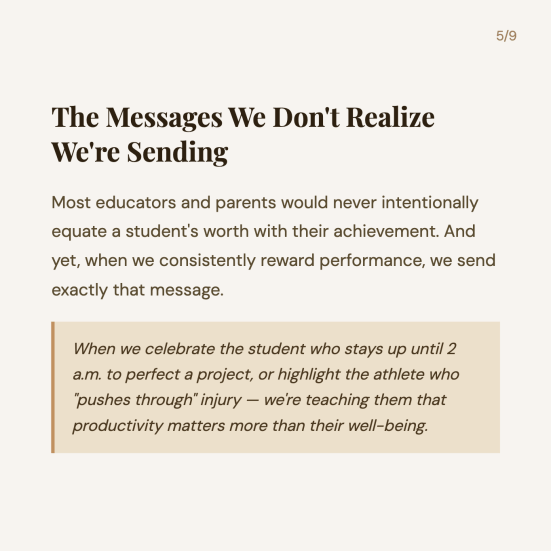
The Messages We Don’t Realize We’re Sending
Most educators and parents would never intentionally equate a student’s worth with their achievement. And yet, when we consistently reward performance, we send exactly that message.
These ideas are reinforced not only in academics but also in sports, on social media, and in everyday conversations about success and effort. When we celebrate the student who stays up until 2 a.m. to perfect a project, highlight the athlete who “pushes through” injury, and when our most glowing praise goes to students who never ask for help, we’re teaching them that productivity matters more than their well-being, and that needing help is something to hide rather than honor.
These lessons follow students into adulthood, where the same internal pressures resurface as overwork, burnout, chronic self-criticism, or relapse into disordered behaviors.
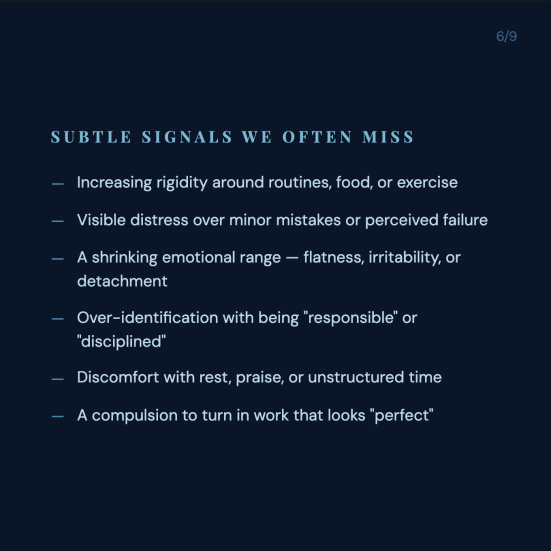
Subtle Signals We Often Miss
I still wonder how I hid my struggles so well that no adult ever took me aside to ask if I was okay.
I didn’t know how to ask for help. I didn’t want to acknowledge a problem I couldn’t fix on my own, so I became incredibly good at hiding it. I was emotionally mature, regulated my feelings well, and was always a “good kid” — in school, in sports, and at home. I was genuinely happy. But beneath that, I carried an overwhelming amount of pressure.
I leaned on my perfectionist traits and determination to power through. I was always organized, but my systems became more rigid. My writing was always precise, but my handwriting became almost too perfect. And my obsession with tracking and micromanaging every bit of food that entered my body became all-consuming.
Continue reading on McGraw Hill’s Inspired Ideas
 techieMusings